
Information on Safe Migration
We promote the role of women in society,
revealing her personal potential, professionally
assisting in the realization of civil and social rights
revealing her personal potential, professionally
assisting in the realization of civil and social rights





Since October 2025, Europe is changing its entry rules: biometrics instead of stamps.
10.08.2025
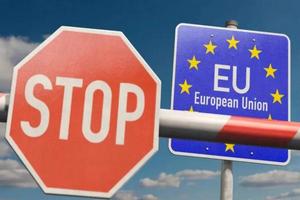 Starting from October 12, 2025, travelers to Europe will face significant changes at the border — the European Union is launching a new Entry/Exit System (EES).
Now, instead of the usual stamps in passports, digital biometric scanning will be used for citizens of non-EU countries. Refusal of the procedure is not possible — those who do not provide biometric data will simply be denied entry.
For the first time in the history of the EU, travelers' biometric data will be stored centrally. This includes the following biometric data:
- facial photographs,
- fingerprints,
- name and type of travel document,
- time and place of entry or exit from the EU territory.
The new rules are expected to enhance security, control over compliance with stay regulations, and simplify border control procedures. The ultimate goal is to reduce the number of overstay violations and exchange data between countries in real time.
Information in the electronic system will be stored for three years and automatically deleted, while information about overstay violators will be kept for five years.
The system will operate in all 25 EU countries (except Cyprus and Ireland), as well as in the four non-EU Schengen countries: Iceland, Liechtenstein, Norway, and Switzerland.
The introduction of EES will be a preparatory step for the launch of another important innovation — the European Travel Information and Authorization System (ETIAS), which is expected to start at the end of 2026.
According to ETIAS rules, travelers from non-EU countries will have to pay 20 euros and obtain travel authorization to the Schengen area in advance.
Source: www.virtualbrest.ru
You can leave a comment or share your story:


